Essay - Back to the Song: Cultural Repair in a Time of Ecological Crisis
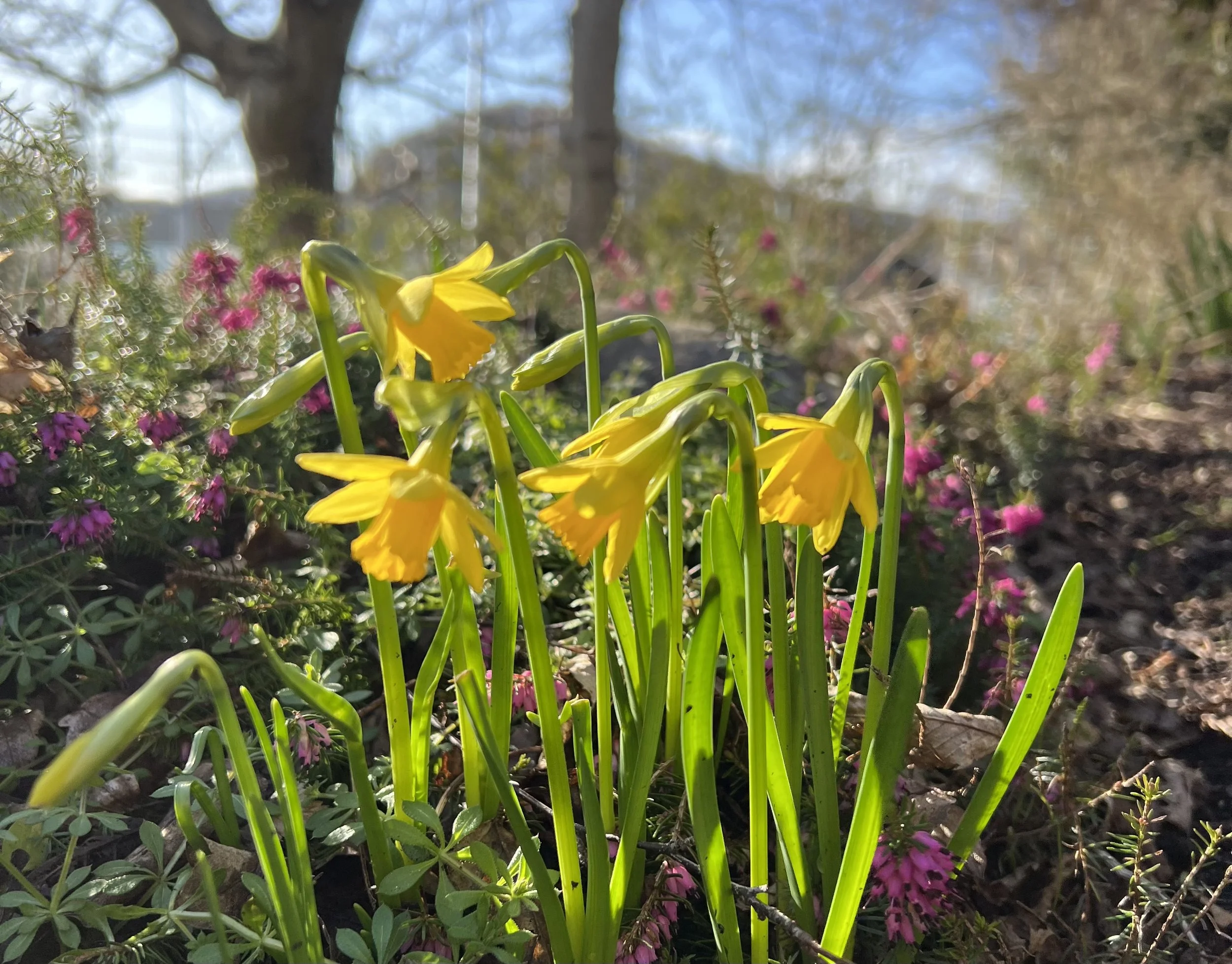
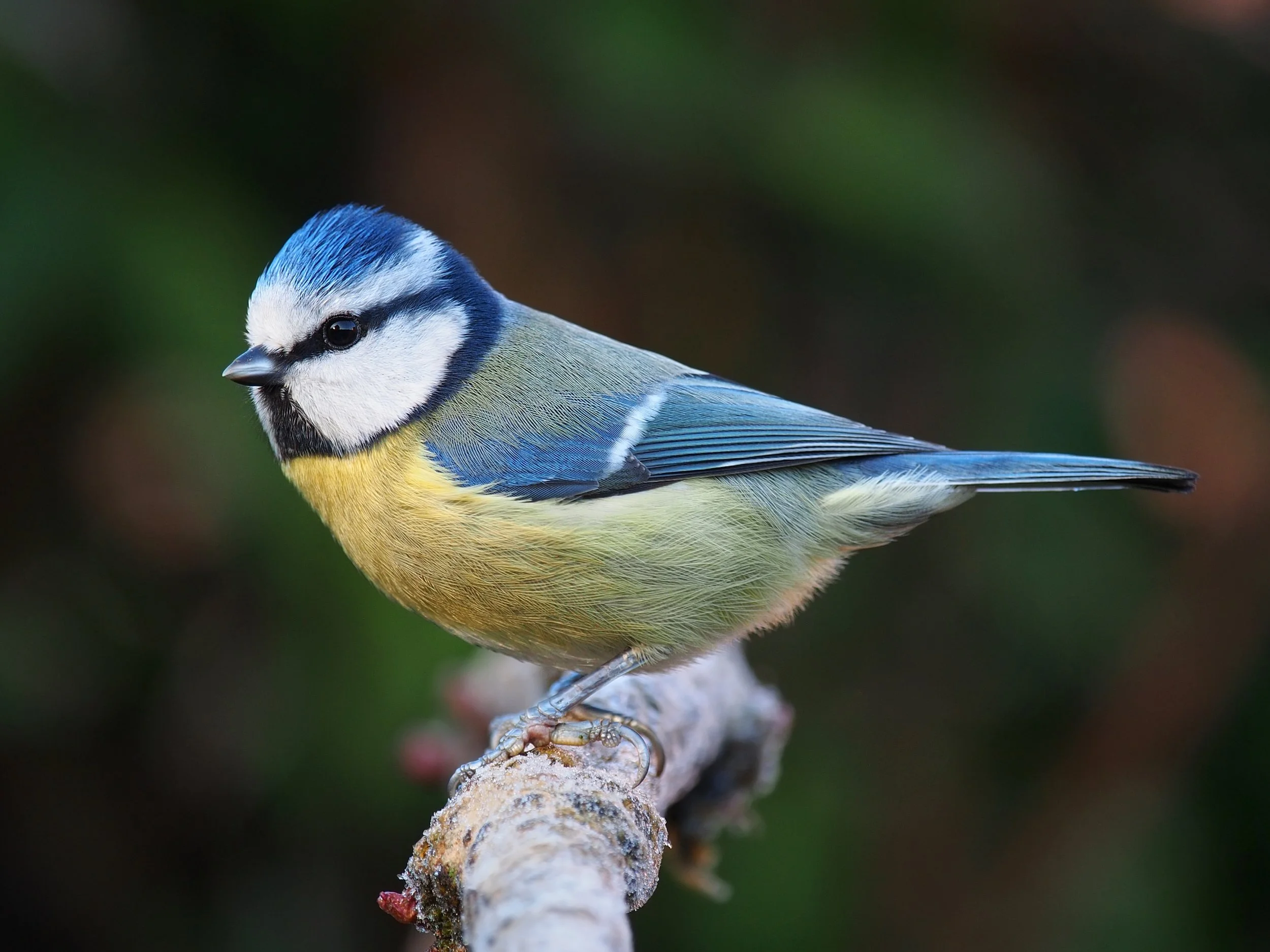
The spring is finally here. The woodland primroses are out in the woods, and the yellow daffodils are almost out in the garden (my favourite). We wake in the morning to the song of the birds: blue-tits and great-tits the loudest, flitting through the birch branches outside the window. But almost as soon as the joy rises in me, it is accompanied by a quiet ache. To hear the birds singing is now always also a reminder of loss.
I have lost count of the reports. The data has been clear for years - decades, in many cases. Earlier this year, the UK government quietly published its own security assessment on biodiversity loss and ecosystem collapse - a report so alarming it was originally withheld from publication, and ultimately released only in redacted form. Its conclusions will surprise no one paying attention: if current rates of biodiversity loss continue, every critical ecosystem is on a pathway to collapse. I read these words and feel not shock, but what I have described elsewhere as a kind of spiritual vertigo.
How are we, as humans, meant to hold this?
Constant background anxiety is a lived reality for many of us. We carry grief for what is being lost, fear and dread for what lies ahead, rage at systems that continue to extract, pollute, and destroy. All of these emotions are complicated by the recognition that even having the space to feel them is itself a privilege. The kind of hope I am reaching for here is not naive optimism; it is closer to what Joanna Macy and Chris Johnstone (2012) call active hope: confronting the full weight of global crises, neither retreating into false hope nor collapsing into despair, and committing to action towards more life-sustaining ways of being.
The philosopher Donna Haraway (2016) calls this ‘staying with the trouble’ - not as a posture of grief or endurance, but as learning to be truly present in the face of such uncertainty. It is recognising that we are never self-contained actors facing a crisis from outside, but are always already entangled - made together with other species, other histories, other damaged and still-living worlds. This asks not for any answer or resolution, but what she calls ‘response-ability’: the capacity to be genuinely affected by, and answerable to, the complex multispecies entanglements we are part of.
The question is, in the full knowledge of the climate and ecological emergency, in the midst of this heartbreaking reality, what does meaningful work look like? What can I offer to the world?
The environmental crises we face are deeply entangled with questions of meaning, ethics and justice, reflecting not only the material impacts of human activity, but also the cultural narratives, values and power relations that shape how we understand and respond to the more-than-human world. The stories we tell, the values we hold and the political and economic systems we build shape both the environments we inhabit and the futures we can imagine. Culture, then, is not peripheral to ecological renewal; it is fundamental to it.
I have long been fascinated by how humans make and carry meaning, through music and song, story and poetry, and the knowledge and practices passed down from generation to generation - the so-called carrying stream of tradition. These threads of memory and practice are more than cultural artefacts; they are maps of living relationships, encoding centuries of attention to land, water, species, seasonal rhythms. Folk knowledge carries guidance on how to inhabit landscapes responsibly, how to read weather and waterways, how to live in reciprocity with nonhuman life. Music, songs and stories are creative expressions of our relationship with place.
Earlier this year, my collaborator Raghnaid Sandilands and I were invited to University College Dublin to speak as part of an event titled (Super)NatureCultures: More-Than-Human Ontologies and Intergenerational Knowledge Systems in the North Atlantic. This brought together folklorists, ethnologists and creative ethnographers from Scotland, Norway, Iceland, and Ireland to discuss the entanglement of the living world beyond the human, and the creative and sometimes uncanny ways these entanglements are expressed. The conversations were rich and often playful - including encounters with fairies, whales, wee birds and eagles - but they also underscored a serious point: our understanding of ‘nature’ is always shaped through cultural meaning-making, interpreted within social, historical and imaginative frameworks.
Going to the very source of the predicament we find ourselves in, we encounter an attitude toward the natural world as something separate from us: inert, external, and existing primarily as a repository of resources to be mastered, extracted, managed. The philosopher Bruno Latour (1991) famously described the separation of the domains of culture and nature as a founding myth of Western modernity: we have never actually lived this way, he suggests, but we have organised our institutions, economies and politics as if we do.
The consequences are very real. Environmental frameworks that treat ecological restoration as a purely technocratic exercise (counting species, measuring carbon, mapping habitats) alongside heritage frameworks that treat culture as separate from the living world end up working at cross purposes; or worse, talking past the very communities whose knowledge and relational practices are most essential to long‑term environmental stewardship.
This separation is also evident in rewilding discourse. At one extreme are efforts that emphasise restoring ‘wilderness’ by minimising or removing human influence altogther. Leading advocates, including George Monbiot (2013), stress that rewilding is not about excluding people, acknowledging that landscapes co-evolve with human presence, and that meaningful restoration depends on human engagement. At the same time, the framing of rewilding often highlights humans as stewards, managers, or restorers - acting upon nature rather than recognising themselves as always already a part of it.
As rewilding practice embraces more relational approaches, it illustrates a broader truth: restoring ecological systems is inseparable from the cultural and ethical relationships through which humans understand, inhabit and care for the living world. Physical interventions - planting trees, restoring peatlands, improving water retention, reintroducing species - are vital, but their long-term success depends as much on those human relationships as on ecological processes themselves. Nature restoration, in other words, is as much a cultural task as an ecological one.
Haraway (Staying with the Trouble, 2016) helps us understand why. For Haraway, humans and the living world are not separate entities that occasionally interact, but are sympoietic - continuously making one another through relationship. There is no stable, self-contained ‘nature’ to be restored from the outside. Robin Wall Kimmerer, writing from within Indigneous Potawatomi tradition (Braiding Sweetgrass, 2013), offers a complementary vision: a world understood through reciprocity, in which relationships with the living world carry obligations of care rather than ownership. ‘Restoring land without restoring relationship,’ she writes, ‘is an empty exercise. It is relationship that will endure and relationship that will sustain the restored land.’
Many cultural cosmologies, particularly Indigenous worldviews, have never imagined such a separation from nature. The Gaelic traditions of Ireland and Scotland, while distinct in their own historical and colonial contexts, carry a comparable ethic of custodianship: older concepts such as dúchas/dùthchas articulate a sense of place and belonging not simply as ownership or residence, but as an ethical capacity to inhabit and belong to a place responsibly within a living web of relationships. Care for land has been embedded within moral, imaginative and intergenerational systems of meaning: songs, stories, placenames and seasonal practices carried across generations encode deep ecological knowledge and relational ethics - ways of noticing, caring for and living with other species and the land, accumulated over centuries of intimate attention.
The ecological crisis is, at its roots, a crisis of relationship. As cultural knowledge erodes, so too do the ecological relationships it sustains. This is where culture and ecology meet: not as separate concerns, but deeply entangled. Responding to the global ecological crisis demands more than behavioural change, environmental awareness, or even rewilding. It calls for deep cultural and ontological repair: the recovery, renewal and creative reimagining of worldviews and practices that cultivate care, responsibility and reciprocity with the more-than-human world.
Cultural repair is not a nostalgic return to an imagined past, nor a simple ‘reconnection’ with a separate nature. What is needed is something more fundamental, more radical: we need to expand our understanding of culture so that our ethical and relational attention includes not just other humans, but nonhuman life and ecosystems - an extension of our very sociality to include obligations of care for and reciprocity with the living systems that sustain us.
This is not just theoretical insight. A commitment to this idea of cultural repair very much guides my current work. Alongside my collaborator Raghnaid Sandilands, I have been working as co-Researcher-in-Residence for the Findhorn Watershed Initiative, a bioregioning ecosystem restoration project in the central Scottish Highlands. The River Findhorn - Uisge Èireann in Gaelic - flows from the Monadh Liath mountains to the Moray Firth. The project, led by Elle Adams, is built on the understanding that nature restoration is as much about human relationships with nature as it is about hands-on restoration work itself. This means finding ways to restore emotional, ethical and place-based connections that foster a sense belonging, responsibility and care.
Through the lens of human ecology, our work traces the human story and cultural memory embedded in Gaelic place names, music, song, story and poetry, revealing how people once understood and related to this river system. To understand that the watershed was once known and named by people who had an intimate knowledge of their place - at a time when ecologies were far richer - can help us imagine how it might be restored in future.
In practice, this work involves deep research, mapping music, songs and stories, hosting community walks, workshops and ceilidhs, collaborating with musicians and singers, and creating experiences that invite people to consider different ways of seeing. We describe our creative practice as cultural darning and mending - weaving disparate threads from the past back into the present with care and purpose. Our work is future-oriented, rooted in an ethical, reciprocal relationship with the land, its people and their stories. While we acknowledge that we cannot mend the whole, it is possible to make small, careful, hopeful acts of repair.
We have also been working to make this case in policy terms. Our recent British Academy paper, Integrating Intangible Cultural Heritage in nature recovery: a place-sensitive approach in the Scottish Highlands (2025), addresses the intertwined cultural and ecological crises facing this particular region, where contemporary injustices have their roots in historical ones. It argues for bridging the persistent divide between the world of cultural heritage policy (the UK ratified the UNESCO Convention for the Safeguarding of Intangible Cultural Heritage only in 2024) and the world of biodiversity and nature recovery. It makes the case that traditional ecological knowledge, practices and cultural expressions are not peripheral to nature recovery but central to it. This not about preservation alone, however: the carrying stream flows forward as well as back. Alongside inherited traditions, new songs are being written, new relationships with place are being formed, and new voices are finding their way into the conversation. Cultural repair is as much about what we are creating as what we are remembering.
This year I am beginning a new chapter of this work - the most personally rooted one yet. Through a Creative Scotland Open Fund project, I will be in residence at community-owned Abriachan Forest, right on my doorstep. The project, Stories, Songs and Stewardship, is rooted in a simple idea: that ecological care grows not only from data and expertise, but from cultural memory and meaning, shared and kept alive through living creative practice. Through seasonal gatherings and events shared with the community, the project will explore how the songs and stories we tell about a place shape our connection to it, our desire to care for it, and our sense of being part of its ongoing story.
This is where I come back to a simple idea that has long guided my work: Dig Where You Stand. As Alastair McIntosh (Soil and Soul 2001) writes, if you attend deeply to one place - its history, its ecology, its stories - you will find yourself connected to all other parts of the world, entangled in the wider networks of life and meaning that extend far beyond it. I am deeply glad to be rooted in my home patch.
I believe it is at the intimate scale of place that cultural repair takes root: in the oldest, most convivial of human gestures - noticing, naming, remembering, singing, telling. It begins when someone learns the name of a bird, teaches a child a song, or asks an older neighbour about how a place used to be. These small acts of attention and transmission are the root system from which everything else - care for land, species and place - grows.
There is a wee Gaelic song, a port-à-beul - mouth music, carried in the voice alone - that my daughter sings. Far am bi mi fhìn is ann a bhios mo dhòchas / where I will be, there my hope will be. I love it for what it is: joyful, playful, full of life. In the song, the singer is keen to meet a friend and visit the piper’s house, where they plan to make merry and dance - and if the piper is not there, they will go and find the fiddler. It is a song about companionship and conviviality, expressing not a wistful, abstract hope, but something tangible, embodied, rooted. Songs like these have been passed down through generations, carrying memory, identity, shared history, wisdom. To remember these songs, to sing them - to pass them on - is its own kind of darning and mending.
Each morning, listening to the great-tits and blue-tits calling through the branches, I am reminded that life persists even amidst loss and rupture. To notice the wee birds, to learn their names, to learn their songs, to keep showing up despite despair - this is the work. It is here that grief, care and conviviality converge; it is here that hope lives.
Far am bi mi fhìn is ann a bhios mo dhòchas
Far am bi mi fhìn is ann a bhios mo dhòchas
Far am bi mi fhìn is ann a bhios mo dhòchas
Far am bi mi fhìn bidh mo dhòchas ann
With thanks to my friend and collaborator Raghnaid Sandilands for all the conversations, and to Tiber Falzett at the folklore department in University College Dublin - an old friend from our shared days at the School of Scottish Studies. We all share a fascination with birds: those persistent presences that move through song, story and memory, and that arrive, in the older sense of the Gaelic comharradh, as signs - carrying meanings we find ourselves unable to ignore.